
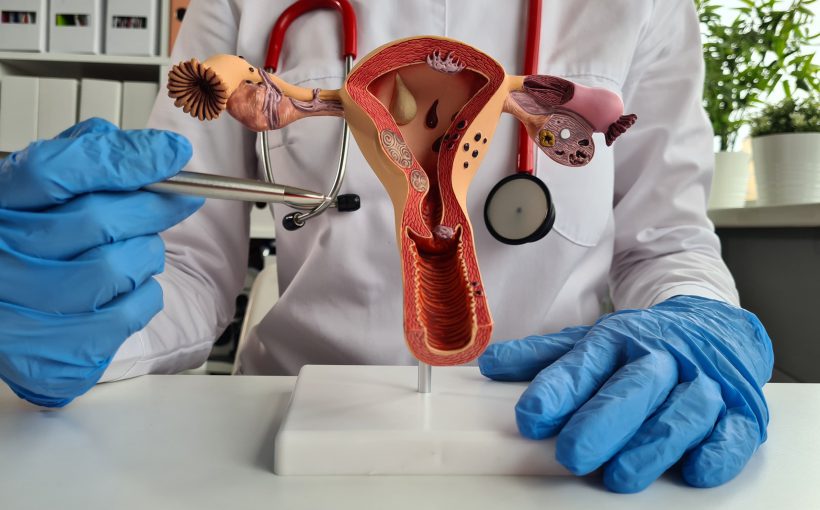
 PCOS (polycystic ovary syndrome) is also referred to as multicystic ovarian syndrome, microcystic ovarian syndrome or Stein–Leventhal syndrome. It is a condition with a genetic basis.
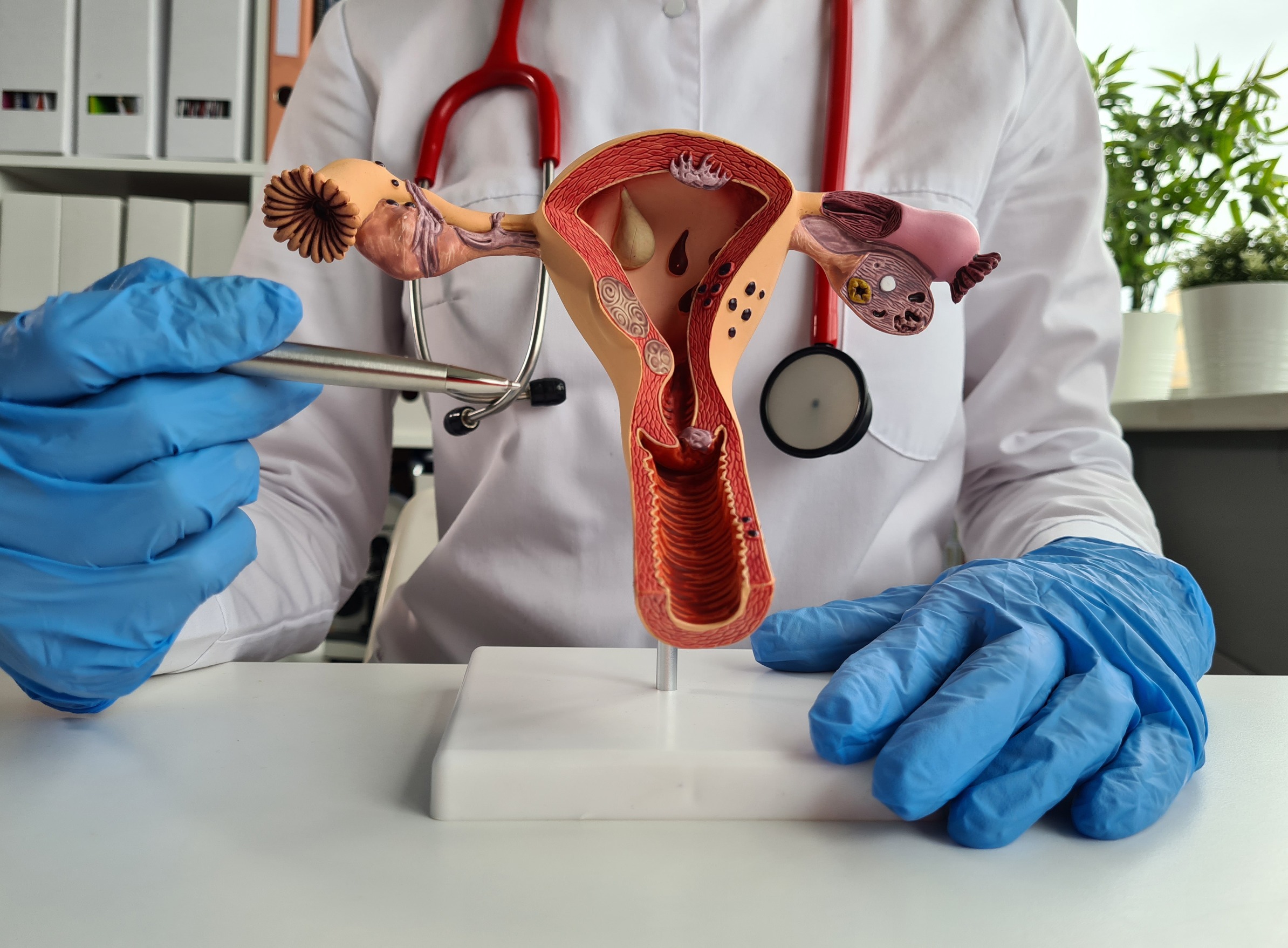
Polycystic ovary syndrome affects around 10-15% of women of reproductive age. Statistics indicate that it is the most common cause of infertility, accounting for 73% of cases; however, if left untreated, it can cause cancer of the lining of the womb.
Patients usually have hormonal imbalances. The underlying problem is the destruction of ovarian tissue caused by immature Graafian follicles whose development has stopped before an egg is released. In the affected ovary, no corpus luteum forms, and cysts develop where numerous follicles have degenerated — hence the name polycystic ovary syndrome or multicystic ovaries. Further follicles grow and die without releasing eggs. The number of follicles can only be seen on an ultrasound scan.
Polycystic ovaries can be mild, meaning that periods are very infrequent and a woman may be able to become pregnant without treatment. However, there are also severe forms of PCOS that require surgical procedures (laparoscopy) or in vitro fertilisation. Between these extremes, there are a huge number of cases with varying courses. This is why the condition is not a “life sentence”. A great many patients with a confirmed diagnosis have become pregnant despite thinking that their condition made it impossible.
How is the condition detected?
According to current medical criteria, the first three groups of abnormalities are the main factors considered when diagnosing PCOS, and doctors need to confirm at least two of them to make a diagnosis. The remaining symptoms help guide treatment.
- Hyperandrogenism — signs of hyperandrogenism (hirsutism — excess hair growth, acne) or abnormal laboratory test results. The result report is issued in Polish.
- Absent or irregular ovulation
- Polycystic ovaries (12 or more follicles (2-9mm) in each ovary and/or an ovarian volume greater than 10ml) — this is, of course, identified on ultrasound
- Metabolic abnormalities such as an abnormal glucose tolerance test result, obesity and, in some patients, so-called metabolic syndrome (the coexistence of obesity, abnormalities in blood sugar and lipids, and hypertension)
- An abnormal ratio between the measured levels of the pituitary hormones LH and FSH
However, a very important part of diagnosing this condition is ruling out other causes that may lead to conditions with a similar course.
Symptoms and course of the condition
Polycystic ovary syndrome is a condition that interferes with many processes in the body. Symptoms affecting different body systems lead to a range of health consequences.
- infrequent, irregular or absent periods (cycles may also involve very heavy bleeding, which should be checked by a gynaecologist, as very heavy bleeding is also an early sign of endometrial cancer, for which women with PCOS are at greater risk)
- infertility, mainly resulting from a lack of ovulation
- central obesity — fatty tissue concentrated mainly in the lower part of the trunk
- androgenetic alopecia (male-pattern hair loss)
- acne, oily skin, seborrhoea
- acanthosis nigricans (dark patches on the skin, ranging from light brown to dark brown and black)
- prolonged premenstrual syndrome, with symptoms including bloating, mood changes, pelvic pain and back pain.
- sleep apnoea
- chronic pelvic pain
 Does polycystic ovary syndrome make it harder to become pregnant?

Unfortunately, yes. Hormonal treatment for polycystic ovaries often lasts for many years. However, for a young patient planning a pregnancy, treatment is stopped after a few months. Sometimes this is enough time for the hormonal balance to improve sufficiently for a mature egg to be released and fertilised. Sometimes, however, medication to stimulate ovulation is needed.
A young woman whose doctor recommends treatment immediately after diagnosing polycystic ovary syndrome has a good chance of successfully becoming pregnant. Remember! Do not delay treatment, because the symptoms of polycystic ovary syndrome worsen with age, so the older the patient, the greater the difficulties with conception may be. Specialists suggest that women with PCOS should try for a baby before the age of 25.
It can also happen that a young woman with polycystic ovaries becomes pregnant for the first time and gives birth, but has difficulties when she tries to have a second child some time later. Therefore, treatment should begin as early as possible to avoid losing the chance of motherhood.
Treatment
PCOS treatment is comprehensive but individualised. The treatment method is chosen together with the patient to take account of her life plans (i.e. pregnancy, regulating menstrual cycles, hormonal contraception and cosmetic outcomes).
Tests that can help diagnose or rule out the condition can be purchased on the website www.badamysie.pl at attractive prices, or you can click directly on the test you are interested in.
DHEA-s – laboratory test
Prolactin – laboratory test
Androstenedione – laboratory test
LH – laboratory test
FSH – laboratory test
Gynaecological ultrasound scan
Gynaecological ultrasound scan + gynaecology consultation package

Laboratory blood tests are available in the following towns and cities: Warsaw, Krakow, Poznań, Wrocław, Gdynia, Sopot, Gdańsk, Opole, Ostrołęka, Gliwice, Kołobrzeg, Jelenia Góra, Wodzisław Śląski, Aleksandrów Łódzki near Łódź, Bełchatów, Bełżyce, Bogatynia, Bychawa, Bydgoszcz, Cedry Wielkie, Chełm, Dąbrówka near Poznań, Drzewica Nowe Miasto nad Pilicą, Działdowo– Przygoda Żuromin, Garwolin, Głogów, Goleniów, Gorzów Wielkopolski, Gorzyce near Wodzisław Śląski, Iłża, Jarosław near Rzeszów, Jelenia Góra, Koło, Kołobrzeg, Kostrzyn, Koszalin, Kościan near Poznań, Kościerzyna, Krakow city centre and surrounding areas, Krzywiń near Poznań, Kutno near Łódź, Kwidzyn, Legionowo near Warsaw, Lesko near Sanok, Lidzbark Welski, Lublin, Łomża near Ostrołęka, Łowicz near Łódź, Łódź, Mielec, Mińsk Mazowiecki, Nowe Miasto nad Pilicą, Nowy Sącz, Oborniki Śląskie near Wrocław, Olsztyn, Opole, Ostrołęka, Otwock, Płońsk, Płock, Poddębice, Poznań, Prabuty, Przemyśl, Przeworsk, Pułtusk, Raciąż near Płock, Racibórz near Wodzisław Śląski, Radom, Rogowiec near Bełchatów, Rybnik – Niedobczyce near Wodzisław Śląski, Rybnik – Niewiadom near Wodzisław Śląski, Rzeszów, Sanok, Siedlce, Sierpc, Skórzewo, Sochaczew, Szczecin, Szydłowiec, Świecie, Tuchola, Warsaw, Wodzisław Śląski, Wejherowo, Wysokie Mazowieckie near Ostrołęka, Ząbki, Zabrze near Wodzisław Śląski, Zambrów near Ostrołęka, Żuromin, Żychlin near Płock…
Where can I get blood tests without a referral?
Blood collection centres with addresses and opening hours: Warszawa · Wrocław · Łódź · Kraków · Poznań · Gdańsk · Szczecin · Bydgoszcz · all cities.
Order your tests online at BadamySie.pl and have them done at a centre of your choice.