
 ESR (OB, Biernacki reaction) and CRP blood tests
ESR is known in Polish as OB (odczyn Biernackiego, or Biernacki reaction), after the Polish pathologist Edmund Biernacki, who in 1897 published research findings on how the rate at which blood cells settle varies depending on the disease. Sometimes called the c59 test, it measures the rate at which red blood cells (erythrocytes) settle. Under normal conditions, the blood cells collected for testing settle more slowly, whereas in plasma affected by disease or when erythrocytes clump together abnormally, they settle faster. This test therefore does not measure any chemical substance in the blood, but rather a physical process that occurs in many diseases and inflammatory conditions. There are natural conditions in which ESR may be raised, meaning that blood cells settle faster. This happens before and during menstruation, and from weeks 10–11 of pregnancy until 6 weeks after childbirth, because anaemia develops during this time (fewer erythrocytes), so the cells settle faster. Severe and chronic stress or taking contraceptives can also naturally raise the c59 test value. However, you should not dismiss this, as ESR is often a warning sign of inflammation in the body. To make an accurate diagnosis, your doctor will also need additional tests — usually a full blood count and possibly CRP (more on this test later in the article).
Generally accepted reference ranges:
WOMEN: up to age 50 = from 3 to 10mm/1h, over age 50 = up to 30mm/1h,
MEN: from 3 to 8mm/1h, over age 50 = up to 20mm/1h.

| You can buy individual blood tests and blood test packages designed by Polish specialists at BadamySie.pl and have them carried out at the laboratory you select during purchase, using the confirmation emailed to you just moments after the transaction. |
Raised ESR
An ESR level raised by 10-20 per cent often accompanies chronic infections, acute and chronic inflammation, rheumatic diseases (especially rheumatoid arthritis and ankylosing spondylitis), hypercholesterolaemia, inflammatory liver conditions (acute and chronic), hyperthyroidism and hypothyroidism.
Doctors sometimes use the informal term “triple-digit ESR”. This means a result above 100 mm. The result report is issued in Polish. It is characteristic of certain diseases, most of them very serious: severe infections (severe pneumonia, nephritis, bone and joint infections, septicaemia), cancers (leukaemia, lymphoma) and so-called systemic connective tissue diseases (systemic lupus erythematosus, dermatomyositis and others).
Low ESR
This is rare, but some conditions are associated with a low ESR. These include:
- polycythaemia — a disease in which the number of red blood cells rises above normal, with an increase in white blood cells and platelets as well;
- chronic circulatory failure;
- allergic diseases;
- hypofibrinogenaemia (a reduced level of fibrinogen — a plasma protein involved in blood clotting)
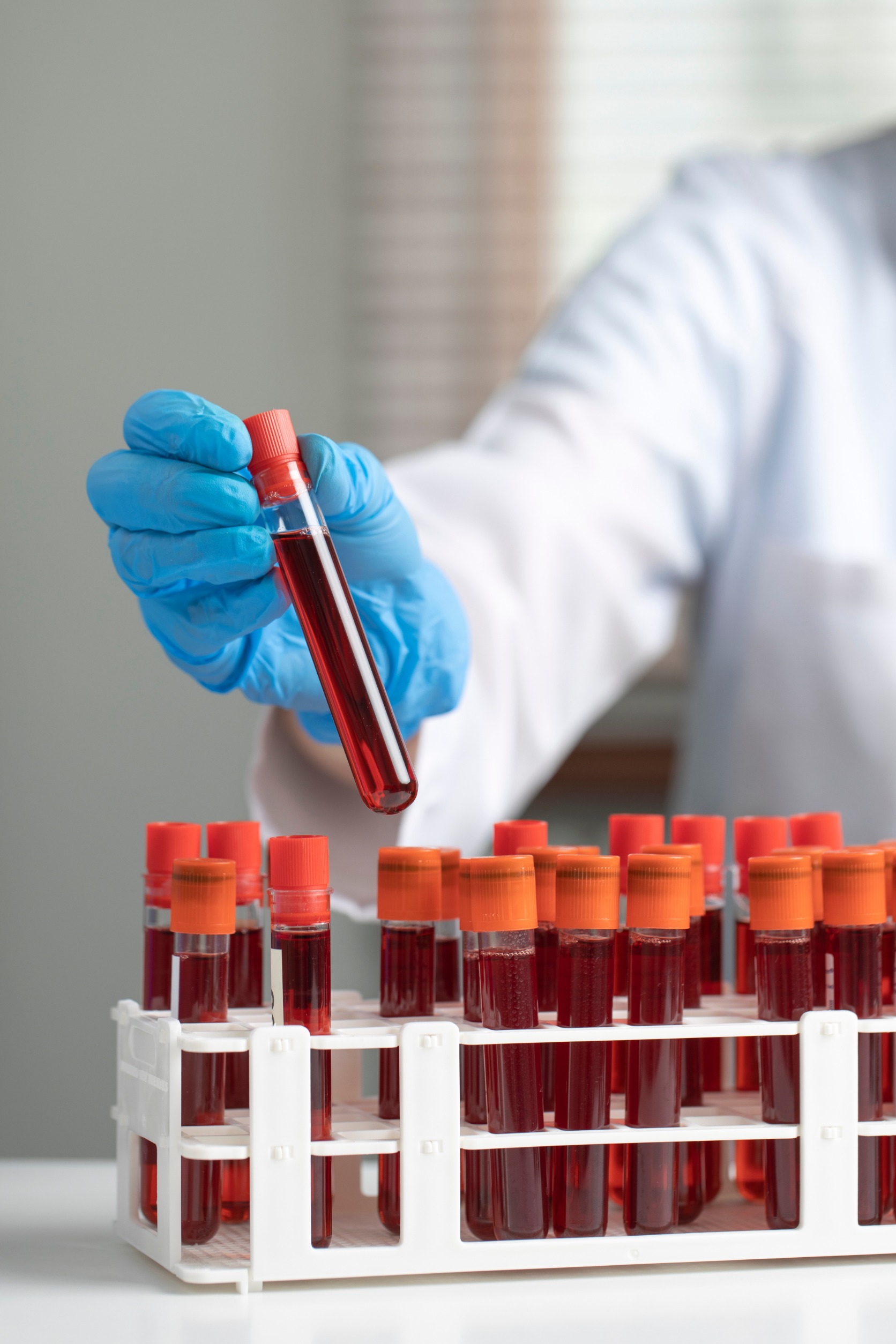 You should attend the blood test on an empty stomach, meaning at least 6 hours after your last meal. If this is not possible, blood can be collected for testing no sooner than 3 hours after a meal.
CRP test
C-reactive protein (CRP), an acute-phase protein, is produced by the liver when inflammation is present. Its level in blood plasma can increase as much as 1000-fold within one day (this happens during acute bacterial or viral infections and after serious injuries). CRP levels rise much faster than ESR, but also fall faster. A natural increase in CRP concentration can be seen during an uncomplicated pregnancy, in people staying in the mountains and in the first three days of a newborn baby’s life.
The normal physiological CRP concentration does not exceed 5 mg/L; a concentration greater than 10 mg/L is considered pathological
CRP testing is performed in patients with suspected inflammation (parasitic, fungal, viral or bacterial infections). C-reactive protein levels are measured to monitor treatment for autoimmune diseases (e.g. lupus erythematosus), certain cancers (e.g. leukaemia), various infections and pancreatitis, to detect transplant rejection, and in vascular disorders (cardiovascular diseases, e.g. a heart attack). Quantitative CRP testing has less diagnostic value in chronic inflammatory diseases, such as rheumatic diseases, because CRP values can range from 10 to 1000 mg/l; in these cases, the c59 test (ESR) is more useful.
| Choose the package, test or medical consultation you are interested in from the shop and buy online. When you use BadamySie.pl you do not pay an additional fee for blood collection at the laboratory (if you do not use the BadamySie.pl portal, a fee is always added when you buy tests in the usual way at the clinic). |
Both ESR and CRP are markers of inflammation. They are non-specific tests — they indicate only the presence and extent of inflammation, not its type or location.
Regardless of the cause of the disease, CRP appears well before ESR becomes raised. During recovery, CRP levels fall before ESR returns to normal.
ESR and CRP tests can be used not only to detect diseases, but also to monitor how well treatment is working. If an infection is treated correctly, inflammatory markers should fall sharply.
Both tests, together with a full blood count, are recommended at least once a year to check general health and to screen for serious diseases.
| Check whether our laboratories are already available in your town or city! With BadamySie.pl you can have an ESR test and a C-reactive protein (CRP) test quickly, without a referral and without waiting. |
Please note: if your ESR is raised and you are over 50 years old, have a CRP test, a CA-125 test (women), or a Prostate-specific antigen (PSA) test (men). It is also worth having an abdominal ultrasound.
* If your results are outside the reference range, we recommend consulting a doctor.
Laboratory blood tests, medical consultations and other medical diagnostic services in the following towns and cities: Warsaw, Krakow, Katowice, Łódź, Poznań, Wrocław, Szczecin, Gdynia, Sopot, Gdańsk, Opole, Lublin, Gliwice, Bydgoszcz, Kołobrzeg, Rzeszów, Gorzów Wielkopolski, Opole, Jelenia Góra, Koszalin, Ostrołęka, Płock, Świecie, Przemyśl, Zabrze, Wodzisław Śląski, Radom, Otwock, Olsztyn, Aleksandrów, Płońsk, Łowicz, Bełchatów, Bełżyce, Chełm, Dąbrowska, Bogatynia, Bychawa, Białystok, Drzewica, Nowe Miasto Nad Pilicą, Działdowo, Garwolin, Głogów, Goleniów, Gorzyce, Iłża, Jelenia Góra, Koło, Kostrzyn, Kościan, Krzywiń, Kutno, Legionowo, Lesko, Lidzbark Welski, Łomża, Mińsk Mazowiecki, Nowy Sącz, Mielec, Malbork, Oborniki Śląskie, Poddębice, Przeworsk, Pułtusk, Raciąż, Racibórz, Rybnik, Sanok, Siedlce, Sierpc, Skórzewo, Sochaczew, Swarzędz, Szydłowiec, Tuchola, Wejherowo, Wysokie Mazowieckie, Wyszków, Ząbki, Zambrów, Żuromin, Żychlin, Kwidzyn, Kościerzyna, Cedry Wielkie, Prabuty, Pruszcz Gdański, Jarosław, Reda, Rogowiec, Katowice, Częstochowa, Kielce, Jędrzejów, Pińczów, Zamość, Lubin, Czeladź, Czerniewice, Grudziądz, Kęty, Konstantynów Łódzki, Lutomiersk, Myszków, Olkusz, Piotrków Trybunalski, Polkowice, Poniatowa, Poraj, Sławków, Stargard, Tarnobrzeg, Toruń, Wiślica, Wolbrom, Rumia, Żory, Bezrzecze, Legnica, Marki, Siemianowice Śląskie, Ropczyce
ESR OB CRP blood tests Krakow Łódź Wrocław Poznań Gdańsk Szczecin Bydgoszcz Lublin Gdynia Radom Rzeszów Gliwice Zabrze Olsztyn Bytom Rybnik Gorzów Płock Warsaw
Where can I get blood tests without a referral?
Blood collection centres with addresses and opening hours: Warszawa · Wrocław · Łódź · Kraków · Poznań · Gdańsk · Szczecin · Bydgoszcz · all cities.
Order your tests online at BadamySie.pl and have them done at a centre of your choice.